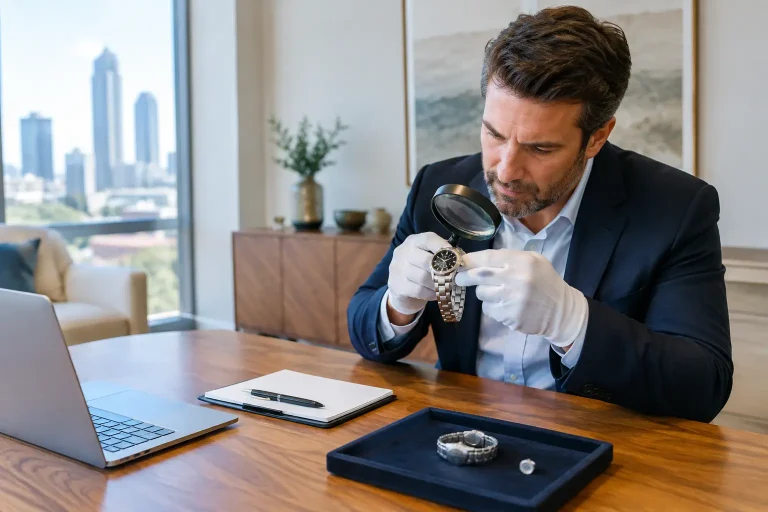
A home filled with inherited furniture, artwork, silver, jewelry, and collectibles can create an immediate practical question: what is worth keeping, insuring, dividing, selling, or researching further? A walk through appraisal service provides a professional, on-site way to obtain informed verbal opinions of value without commissioning a formal written appraisal report for every item in the residence.
For many families, executors, trustees, and collectors, that distinction matters. A walk-through can help identify items that may warrant further attention while providing perspective on a broad range of household contents. It is not a substitute for a written appraisal when documentation is required for tax, insurance, court, charitable contribution, or formal estate administration purposes. It is, however, often a sensible first step when the immediate need is guidance rather than a report.
What Is a Walk Through Appraisal Service?
A walk-through appraisal is an on-site consultation in which a qualified personal property appraiser inspects selected property and provides verbal opinions of value. The appraiser may discuss the characteristics that affect value, such as maker, age, materials, condition, provenance, rarity, market demand, and recent comparable sales activity.
The scope is generally broader and less formal than a written appraisal assignment. Rather than preparing a detailed item-by-item report with photographs, research documentation, definitions of value, and written conclusions, the appraiser evaluates the property during the visit and communicates findings directly to the client.
This can be especially helpful when a residence contains a mix of ordinary household furnishings and a smaller number of potentially significant objects. Not every piece of furniture, decorative accessory, or collection requires the time and expense of a fully documented written appraisal. A professional walk-through can help distinguish between items that may have meaningful market value and those whose value is primarily practical or sentimental.
When a Verbal Opinion Is the Right Starting Point
A verbal consultation can be appropriate when the intended use does not require a written appraisal report. The purpose should be clear before the appointment is scheduled, because intended use guides the necessary scope of work and reporting format.
An executor who has just entered a family home may need a preliminary understanding of its contents before making decisions about distribution, storage, liquidation, or further research. Adult children may want impartial guidance before dividing inherited furnishings, artwork, jewelry, or collections. A collector may be deciding which pieces deserve more extensive documentation, conservation attention, or specialized market research.
A walk-through is also useful for clients preparing a residence for sale, downsizing, or moving. The appraiser can help identify property that should not be casually donated, discarded, or included in a general household sale without further consideration. This does not mean every identified item will command a high price. Value depends on the applicable market and type of value, as well as condition, quality, and current demand. The benefit is informed triage based on professional knowledge rather than assumption.
In North Georgia, Atlanta, and throughout the Southeast, estates often include regional decorative arts, antique furniture, sterling silver, firearms, rugs, coins, paintings, and family jewelry. Many of these categories require experience with both the objects themselves and the markets in which comparable property is bought and sold. Charles Pharr Jr., ISA CAPP, brings firsthand experience in antiques, fine art, auction, and secondary resale markets to these consultations.
What the Appraiser May Consider During the Visit
A meaningful verbal opinion is more than a quick guess based on appearance. The appraiser considers the property available for inspection and the assignment conditions. A signed painting, for example, may require consideration of the artist, medium, dimensions, condition, subject matter, exhibition history, and evidence supporting attribution. A silver service may be evaluated for maker, pattern, weight, completeness, condition, and whether it is sterling, coin silver, plated, or a combination of materials.
For furniture, construction, age, form, materials, finish, condition, maker or retailer, and regional market demand can all affect the opinion of value. With jewelry and watches, the available information may be limited during an initial visit. Marks, gemstones, metal content, condition, and brand can be relevant, but specialized gemological testing, watch authentication, or additional research may be needed before a formal conclusion is developed.
The appraiser may also identify issues that affect value but cannot be resolved through visual inspection alone. Attribution, authorship, authenticity, restoration, title, provenance, and gemstone identification can require specialized examination or supporting documentation. A walk-through should not be confused with an authentication service, a purchase offer, or an auction estimate intended to secure consignment.
What a Walk-Through Does Not Provide
The limitation of a verbal opinion is often as important as its convenience. A walk-through appraisal service does not ordinarily provide the written documentation needed for an estate tax filing, charitable contribution, insurance scheduling or claim, equitable distribution proceeding, divorce matter, litigation, or other matter involving third-party reliance.
Those assignments may require a written appraisal report developed for a stated intended use and intended users. Depending on the assignment, the report may address the appropriate definition of value, such as fair market value or replacement value, identify the effective date of value, describe the property, explain the scope of work, and present supporting analysis and conclusions.
Fair market value and replacement value are not interchangeable. Fair market value generally addresses the price at which property would change hands between a willing buyer and willing seller in an appropriate market, with neither under compulsion and both having reasonable knowledge of relevant facts. Replacement value is commonly used for insurance purposes and considers the cost to replace property with like kind and quality in the applicable retail market. The same object can have materially different conclusions under these different definitions of value.
A verbal consultation should also not be treated as a written inventory. If an estate requires a defensible record of specific items, photographs, detailed descriptions, and research-supported values, the assignment should be structured from the beginning as a written appraisal.
How to Prepare for the Appointment
Preparation allows more time for the property itself. Gather any records that may help establish identity or history, including receipts, prior appraisals, photographs, invoices, artist information, certificates, family notes, insurance schedules, and provenance materials. These documents do not automatically establish value or authenticity, but they can provide useful context.
It is helpful to identify the client’s questions in advance. Is the concern whether certain items should be retained for formal appraisal? Are family members trying to make an informed division? Is there a need to identify property that may require specialized evaluation? A clear purpose helps the appraiser tailor the consultation to the circumstances.
If possible, make items accessible and group related objects together. Set aside jewelry, coins, watches, documents, and small collectibles in a secure location. For a large estate, clients may wish to begin with rooms or categories of greatest concern rather than expect a single visit to resolve every question in a residence.
Moving From a Walk-Through to a Written Appraisal
A walk-through often clarifies whether a more formal assignment is justified. After the consultation, a client may decide that selected paintings, jewelry, silver, collections, or other objects need written appraisal reports. Alternatively, the inspection may confirm that a formal report would not be proportionate to the property’s likely value or the client’s intended use.
That decision should be practical, not automatic. Written appraisal work involves research, analysis, documentation, and reporting appropriate to the assignment. When it is needed, the report should be developed in accordance with applicable USPAP requirements and International Society of Appraisers professional standards. When it is not needed, a carefully conducted verbal consultation may be the more efficient choice.
For clients in Gainesville, Atlanta, North Georgia, and across the United States, the most useful first question is simple: who needs to rely on the valuation, and for what purpose? The answer helps determine whether a walk-through is enough or whether the circumstances call for a formal written appraisal. A clear conversation at the outset can protect both the property and the people responsible for making decisions about it.